


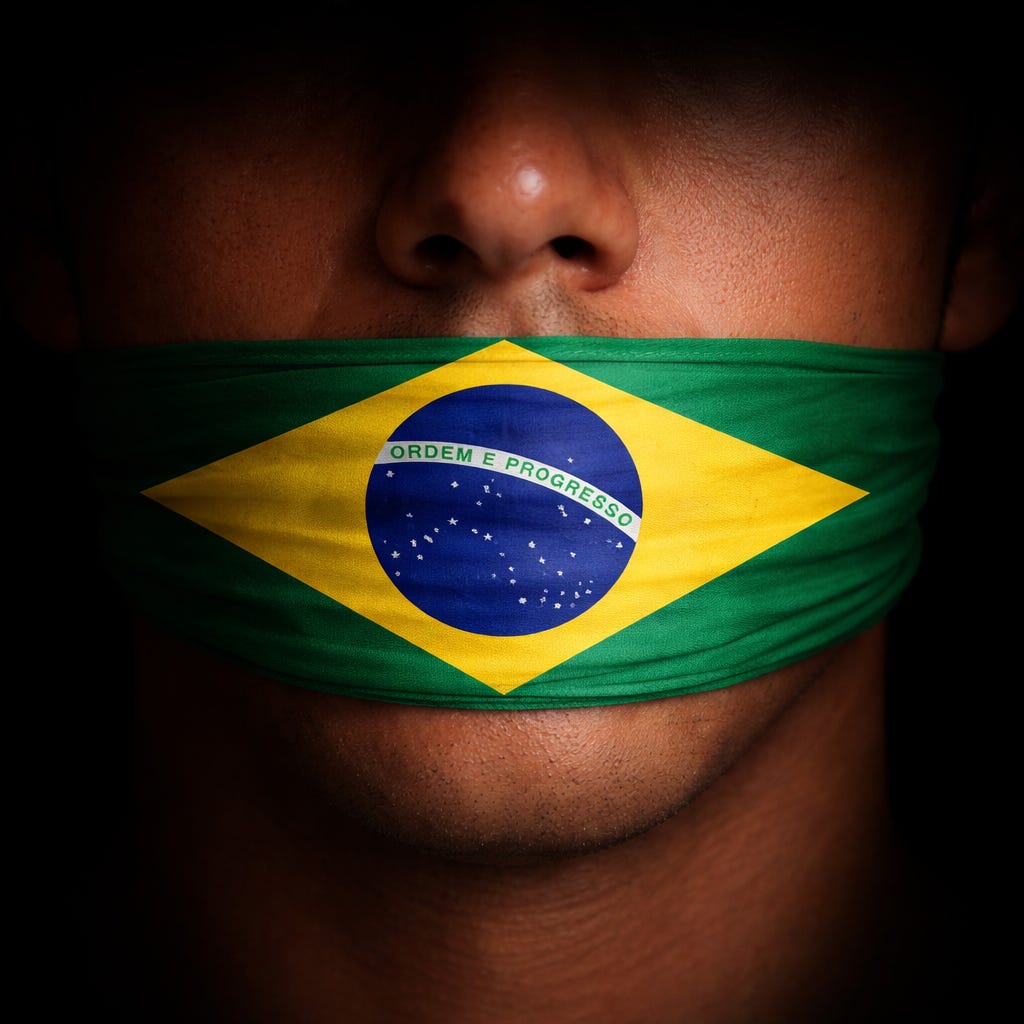
Yesterday, on March 24, 2026, the Brazilian Federal Senate unanimously voted to criminalise “misogyny” under vague terms, by approving Bill 896/2023.
Brazil uses a bicameral system, so the new offense has not yet been made into law. Instead, it will still be sent to the Chamber of Deputies, where it can be approved, amended, or rejected.
Under the proposed statute, which is now up to Brazil’s 513 deputies to consider, two new offenses would be added to the country’s already extensive hate speech provisions:
1) “Insulting someone, offending their dignity or decorum on grounds of [...] misogyny” (Article 2-A of Law No. 7,716, of 1989, or “Racism Act”), punishable by imprisonment from 2 to 5 years, plus a fine, without the possibility of a statute of limitations or bail;
2) “To practice, induce, or incite discrimination or prejudice [...] based on misogyny” (Article 20 of the same statute), punishable by imprisonment from 1 to 3 years, plus a fine, also without the possibility of a statute of limitations or bail.
The bill vaguely defines misogyny, for criminal purposes, as “any conduct that externalises hatred or aversion toward women”.
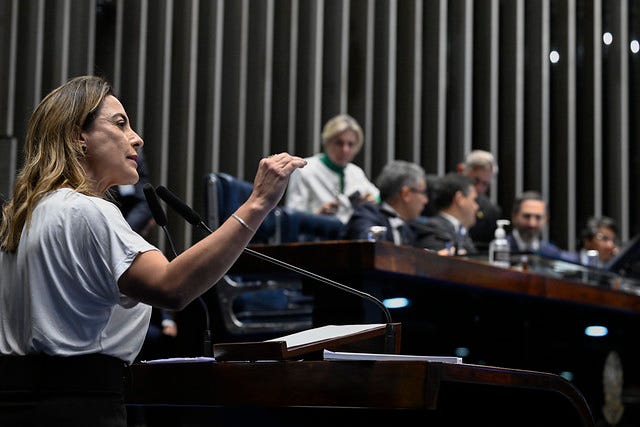
In the voting session, the rapporteur for the bill, senator Soraya Thronicke, cited as examples words that had been directed against her by a journalist (“tramp”, “slut”, “gang leader”) and that had been ruled by a Brazilian judge to constitute free speech.
She also cited members of the redpill movement multiple times as desired targets of criminalisation.
The current situation
Brazil’s current hate crime law is probably the most open in the entire world, giving the state essentially unlimited powers to criminally prosecute individuals on the grounds that they “practiced prejudice”.
In other words, literally any conduct is prosecutable, just as long as the police chief, prosecutor, or judge considers that the accused was internally motivated by prejudice — something that Free Speech Union Brasil (FSU-BR) has termed “institutionalised mind-reading”.
These draconian provisions were first instituted after the passing of a 1989 law nicknamed the “Racism Act”, shortly after the country instated a new democratic constitution after decades of military rule.
The detour beginning in 1990
Ever since 1951, Brazilian law already included several misdemeanors targeting concrete acts of racial discrimination, such as refusing access to someone to a hotel, educational institution or job based on race. However, speech itself was generally exempted from prosecution if it did not constitute a separate offense.
This changed in 1990, when an amendment was made to the new Racism Act of 1989, dramatically expanding the scope of prosecution to the overbroad description of “practicing prejudice”, which has broadly been interpreted to include speech.
On the same occasions, lawmakers also broadened the Act to encompass any prejudice based on ethnicity, nationality or religion.
Social and political pressure towards protecting disprivileged groups has since made it taboo to propose reform or even question the draconian 1990 provision, which is, therefore, rarely criticised even by legal scholars, who have, thus far, mostly abdicated their social duty of pointing out flaws in criminal legislation, for fear of being branded as racist.
As a consequence, rather than fixing the threat for free speech posed by the 1989 Racism Act, legislators have continuously made expansions to it.
This started as soon as 1997, when several expansions were made, including a new provision allowing for immediate judicial orders of confiscation or censorship against content deemed prejudiced, before the accused had a chance to defend himself or was even investigated; and a new provision of book burning (or other forms of “destruction of the confiscated material”) as a result of a criminal conviction.
Expansion by the courts
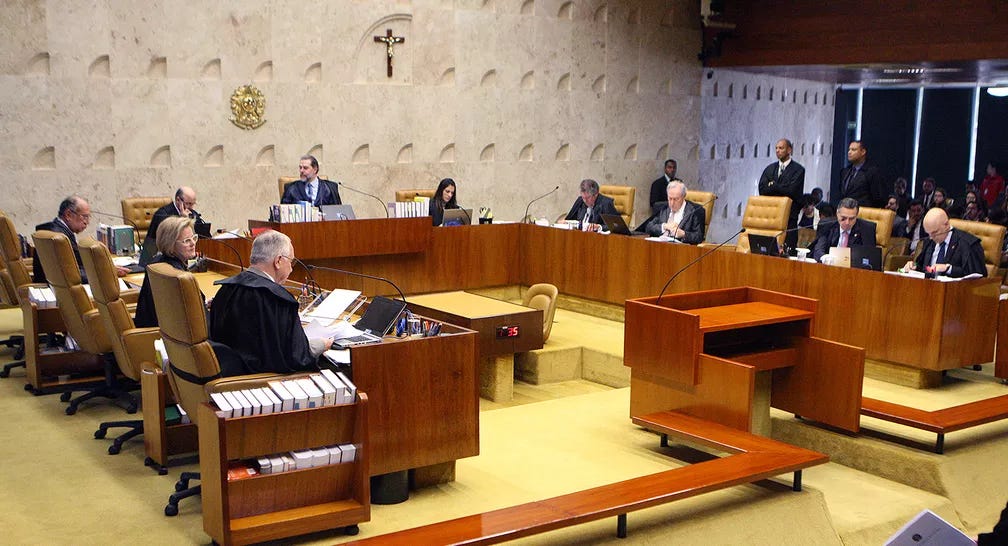
The most controversial turn happened in 2019, when the Brazilian Supreme Federal Court (STF) ruled that Congress was violating the Constitution in failing to protect LGBT groups by passing legislation criminalising homophobia and transphobia (despite the fact that the country’s 1988 Constitution featured no such wording).
Therefore, the STF ruled that the Racism Act should be read as if it contained a provision including prejudice against gay and trans people in those same overbroad offenses, despite the fact that the text contained no such provision.
This ruling was controversial, because it appeared to violate the nullum crimen sine lege principle enshrined in article 5, item XXXIX of the Brazilian Constitution, which explicitly stated that no crime could exist if not previously defined as such in statutory law.
In the justices’ opinions, an explicitly political argument was made that the Court should be the one to enact this criminalisation, lest the newly-elected right-wing president Jair Bolsonaro should veto legislation hypothetically passed by Congress to that effect. (At the time, Bolsonaro was himself known for past declarations widely labeled homophobic.)
This novel interpretation to the Racism Act proved to be the most problematic in the Act’s history. For example, it has been providing a legal foundation for the prosecution of multiple gender-critical feminists for alleged transphobia — all based on mind-reading with reference to a vague criminal provision that did not even exist in black-letter law, but rather constituted a “pseudo-crime” imposed by judicial fiat.
This even resulted in one Brazilian, the gender-critical feminist Isabella Cêpa, being legally granted political asylum in Europe to flee persecution from a trans Congresswoman who had demanded her arrest for stating that she was in fact a man.
Besides high-profile cases such as that one, several lesser-known cases exist across Brazil where defendants have been illegally convicted out of of analogy in malam partem to expand the Racism Act’s draconian provisions to conducts not provided for by its text, such as speech deemed to constitute prejudice against people of other regions within Brazil.
The criminalisation of jokes
In 2023, a major expansion made by Congress to the Racism Act included a specific crime against insults made on the basis of race, skin color, ethnicity or nationality, to preclude the possibility of a statute of limitations or bail.
The 2023 revision was dubbed the “Anti-Joke Act” by its opponents, because it also notably included a provision for it to be treated as an aggravating factor if any conduct covered by the Racism Act was practiced “for fun, entertainment, or leisure”, as a result of pressure from activist groups promoting the newly-coined academic concept of “recreational racism”.
In other words, it was determined that telling a joke should be treated as a more serious offense than making the same statement in earnest. This poorly-redacted revision sought to enforce a complete reversal from the centuries-old civil-law concept of animus jocandi, whereby joking intent was understood to negate the criminal mens rea required to constitute a criminal offense at all.
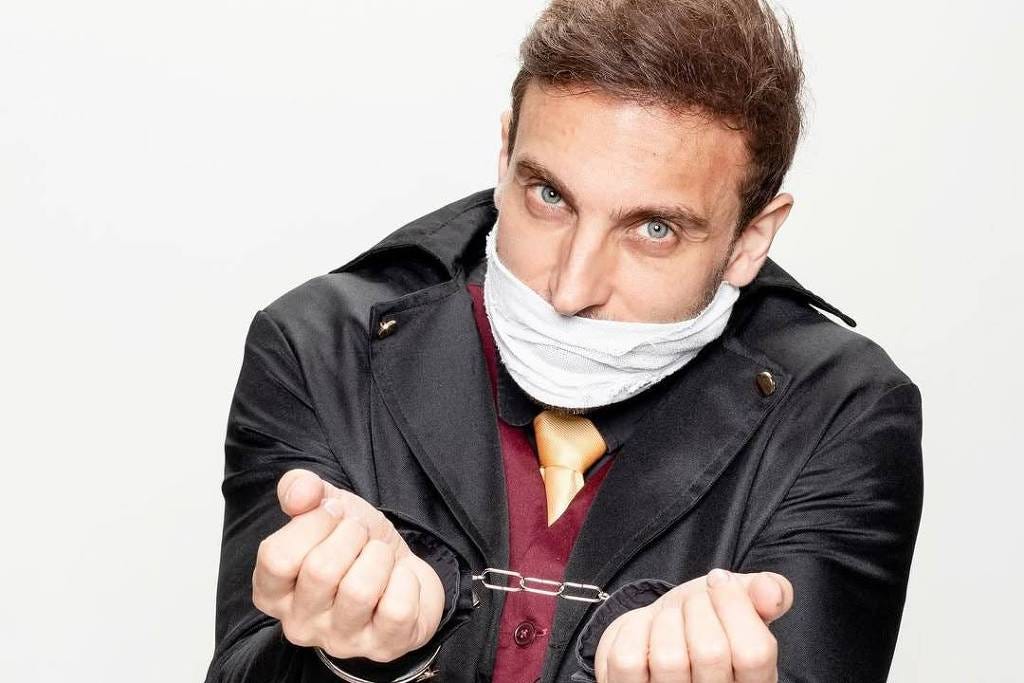
Furthermore, the 2023 act introduced a striking new sanction: an individual ban from venues dedicated to artistic or cultural performances open to the public — effectively exposing Brazilian comedians to the prospect of being barred from performing altogether, if government authorities deemed their past jokes to be offensive against minorities or religious or national groups.
These new legislative provisions have been most famously applied against the comedian Léo Lins, who has been repeatedly targeted in the courts, subjected to gag orders and even sentenced to prison for comedy shows deemed politically incorrect (although Mr. Lins specifically has had some success in overturning these measures in the upper courts and, so far, has not been incarcerated).
The Anti-Joke Act passed the Chamber of Deputies almost unanimously in December 2022, with support across the political aisle in a merely symbolic voting process, with only one party out of 23 — the NOVO party, rooted in classical liberalism — voting against it.
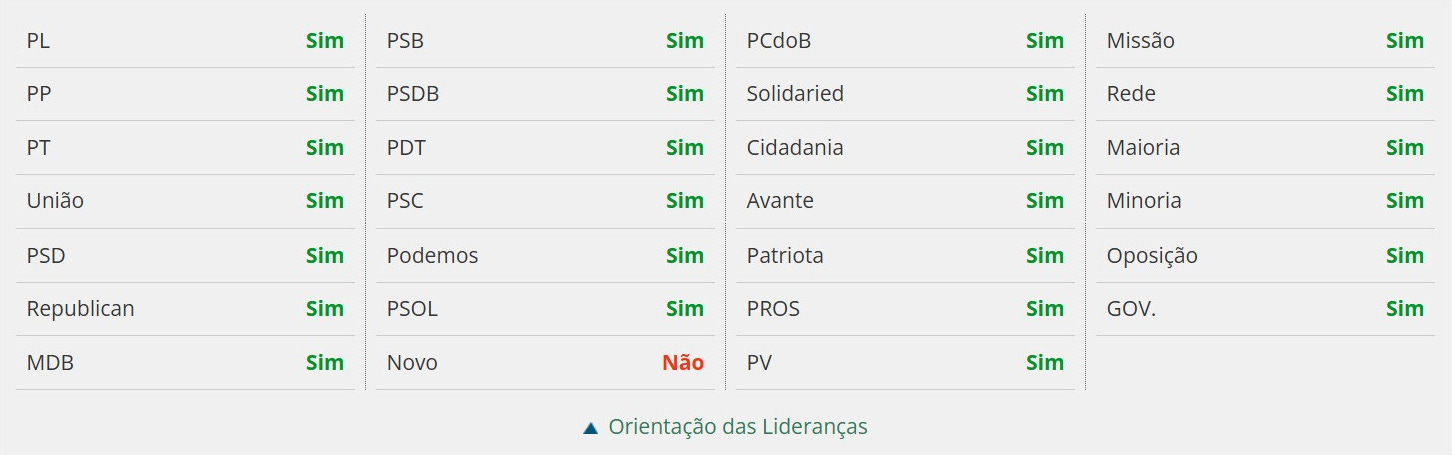
Even the then-ruling government of president Jair Bolsonaro — who had risen to the presidency in no small part due to his brazenly politically incorrect rhetoric — supported the bill, which highlights the taboo that currently exists Brazil against questioning hate speech laws, as well as the lack of robust social and political checks against the advance of censorship — which is precisely the gap that the newly-founded Free Speech Union Brasil aims to fill.
Threats of further expansion
In March 16, 2026, only 4 days after its public debut, Free Speech Union Brasil launched a massive social media campaign against the Senate’s Bill 896/2023, which proposed to expand Brazil’s draconian hate speech laws — already the world’s vaguest — to punish speech vaguely claimed to be anti-woman.
Accusations of misogyny are frequently leveraged in Brazilian public discourse whenever a powerful woman is challenged, most notably by former president Dilma Rousseff, who has plainly stated that the campaign for her destitution was motivated by misogyny, and, more recently, by the Brazilian first-lady Rosângela Lula da Silva (known as “Janja”), who has repeatedly resorted to that accusation to respond to critics of hers.
Free Speech Union Brasil attempted to demonstrate in its campaign that turning this vague accusation into a potentially criminal one would have a profoundly negative chilling effect in public discourse, regardless of the speaker or the target’s political orientation.
FSU-BR’s campaign earned the notable support of Nine Borges, a public intellectual who knew the dangers of Brazil’s mind-reading hate speech laws firsthand, as she had been criminally targeted herself with the accusation of “transphobia” due to criticism leveraged against a trans member of the Lula government (whom she had criticised for the way she was deploying her department’s financial resources).

Borges herself mentioned this when announcing her support for FSU-BR’s campaign on social media, stating that women should stand for liberty even when censorship is imposed in their name, lest they become the next targets when a different preferred group is involved.
FSU-BR’s campaign also had a notable impact in Brazil’s public forum more broadly, with several notable political commentators picking up on the theme of misogyny, trailing on FSU-BR’s footsteps, with many going further to denounce a wave of allegedly misandric laws. There had been no comparable buzz in public discourse before FSU-BR launched its campaign.
Even members of Congress acknowledged the newfound resistance to Bill 896/2023, with the left-wing deputy Talíria Petrone demanding attention from her voters by posting on X on March 24 that “sectors of the far-right” were already mobilizing against the bill.
In addition, the right-wing senator Damares Alves dedicated a speech in the Senate to acknowledge that Bill 896/2023 had “divided Brazil” and that the senators’ offices had been inundated with calls, with “an enormous group in Brazil” singling her out specifically for her past praises of the legislative bill.
This buzz was reflected in the Senate’s official opinion poll for Bill 896/2023. In March 17, early in FSU-BR’s campaign, the opposition to the bill was trailing far behind, with only 1,539 people voting “No” versus 6,019 voting “Yes”.
However, by the time the bill was voted 7 days later, after a concerted effort by FSU-BR, the tide had turned dramatically, with the “Yes” vote having only increased to 6,856, while the FSU-BR-led “No” vote had grown spectacularly to overtake it at 7,676.
Despite our efforts, and despite some of the senators themselves having acknowledged the pressure, the anti-misogyny bill passed the Senate unanimously.
However, FSU-BR’s earlier buzz paved the path for an even louder outrage at the Senate’s unanimous vote, with multiple members in the lower house publicly pledging to act differently than their counterparts in the upper chamber and resist against the project.
The battle is ongoing and may be a long war, because senator Alves herself publicly warned, during the voting session, that plans for a law criminalising ageist speech were next.
Update: On April 7, 2026, members of the Chamber of Deputies announced that, as a result of the controversy surrounding the bill, an agreement was made to delay it, ensuring that it would not be put to vote until after the country’s national elections on October 2026.
(This article was updated on March 26, 2026, to rectify the dates of each of the innovations in the Racism Act in the years 1989, 1990 and 1997. The article was also updated on April 14, 2026, to report the news that an agreement was announced on April 7 to delay the voting of the bill, as well as to rectify and give further information regarding the 1997 amendments to the Racism Act that specifically reflected on the application of the heading of the article 20 of said legislation.)