



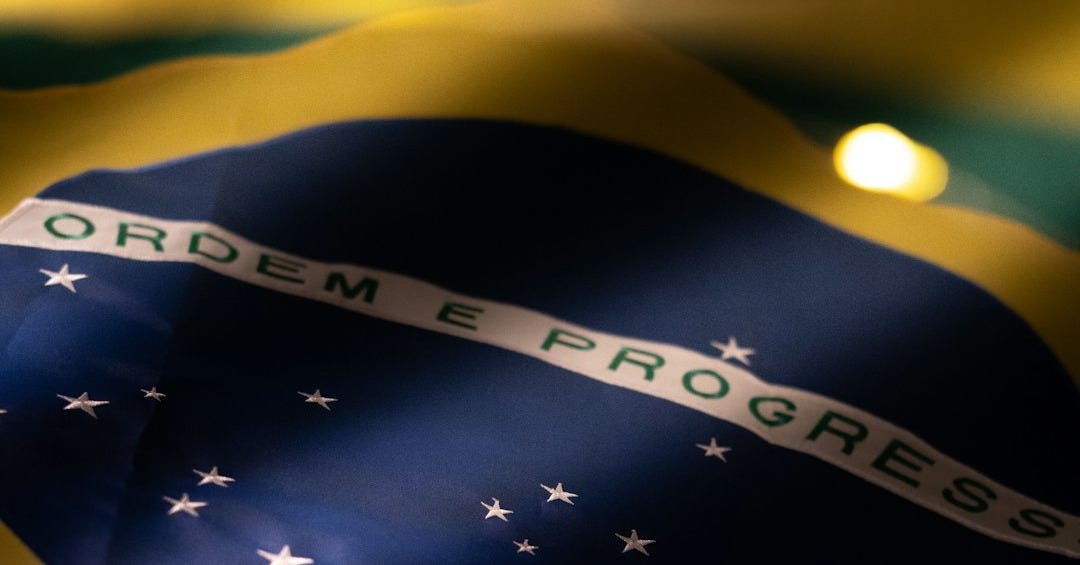
In recent years Brazil has experienced an unprecedented expansion of judicial and political restrictions on speech. Courts have ordered content removed globally, critics of authorities have faced criminal investigations for speech offences, and public debate has grown increasingly constrained. In response, a group of journalists, lawyers and commentators have founded FSU-BR (Free Speech Union Brasil) — a civil association dedicated to defending freedom of expression and assisting individuals targeted by censorship.
Free Speech Under Threat in Brazil — FSU-BR Is Launched. Join Us.
Brazil is experiencing its worst period of violations of freedom of expression since 1968. Citizens have recently been imprisoned for their opinions. Comedians have faced threats of jail. Journalists and commentators have fled the country. Even members of parliament — whose speech is constitutionally “inviolable” — have seen that protection weakened.
In this climate, censorship has become a political weapon. It is condemned when used by opponents and embraced when convenient for those temporarily in power.
Even basic information about censorship in Brazil is scarce. We do not know how many people have been silenced or expelled from social media under the justification of protecting elections or safeguarding the “honour” of public authorities. Nor do we know how many suffer abuses in the country’s interior, far from large urban centres and public scrutiny.
But we do know one thing: a growing number of Brazilians are afraid to speak their minds.
To defend those who have been silenced — in all the ways this now happens — and to promote a culture of liberty, we founded FSU-BR, an association with a singular focus: removing the shackles that constrain free expression in Brazil.
Our online presence has now been launched, and you are invited to join.
By becoming a member, you will help us defend freedom of expression in Brazil. Members may also request assistance if their freedom of expression is unjustly violated. Each case will be analysed individually so that no one is left to face intimidation alone for expressing their views.
If you wish, you may also contribute further as a supporting member or donor.
Behind the scenes, we are already at work. We are drafting proposals for legislative reform to remove legal mechanisms currently used for censorship in Brazil. We have already assisted an individual affected by a court order that demanded the removal of content not only in Brazil but worldwide.
We have also provided assistance to our member Bruno “Monark” Aiub, ensuring that he was defended by lawyers. His case is a striking injustice: a communicator targeted in a witch hunt and persecuted by the state for expressing an anti-censorship opinion about Nazism — speech that is protected under Brazilian freedom-of-expression jurisprudence according to precedents of the Supreme Federal Court. As far as it depends on us, this injustice will be reversed.
Understanding the history of censorship in Brazil is also essential. We are already conducting original research to uncover why the country was once compared to the Ottoman Empire for banning Gutenberg’s printing press for three centuries. We will also promote educational initiatives and maintain a strong presence in public debate to resist attempts to silence speech.
Contrary to what many in the post-dictatorship generation believed, censorship never truly disappeared in Brazil.
It has returned.
We tolerated its reappearance for too long.
Together we can build a less repressive country — one where creativity does not turn into fear of speaking. A country where the next generation never has to learn the bitter taste of being unable to open its mouth.
Honorary Members
During the months leading up to the founding of FSU-BR, we invited individuals we admire to join our Advisory Board of Honorary Members. These distinguished figures will help guide the association and lead by example.
They include:
André Marsiglia
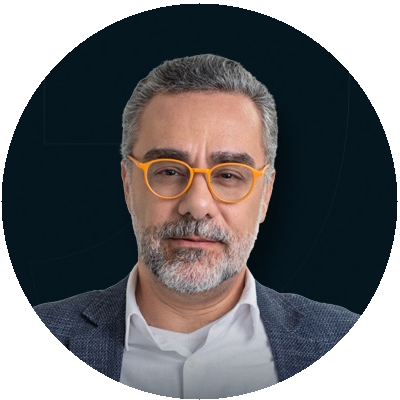
Lawyer, commentator, and specialist in freedom of expression.
Marsiglia has acted as counsel in several notable censorship cases in Brazil, including the 2019 case involving Revista Crusoé. What most surprises him in his work defending free speech, he says, is that many people claim to support freedom of expression without understanding it.
“Brazil is an authoritarian and bureaucratic country that proclaims liberty on paper but often prevents it from being exercised in practice.”
Claudio Dantas
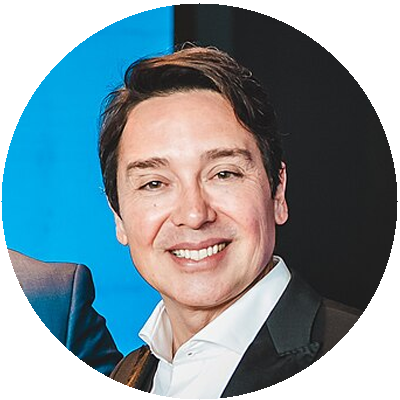
Award-winning investigative journalist and commentator.
Dantas is a prominent figure in the Brazilian press, known for his investigative work and commitment to his principles. His reporting uncovered a unit within the Ministry of Foreign Affairs that persecuted Brazilians in exile during the Military Regime — a dark episode that might otherwise have remained forgotten.
Glenn Greenwald
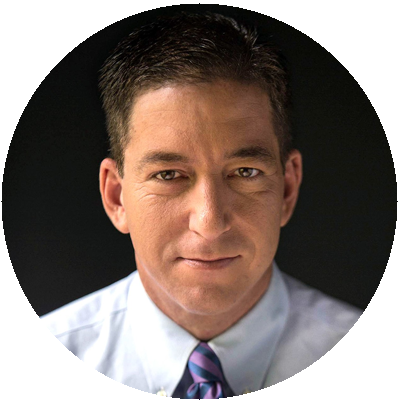
Investigative journalist and commentator.
Greenwald is internationally known for his investigative reporting on government surveillance and political abuses. Long before becoming a journalist, he was already a steadfast defender of freedom of expression.
Jon Benjamin
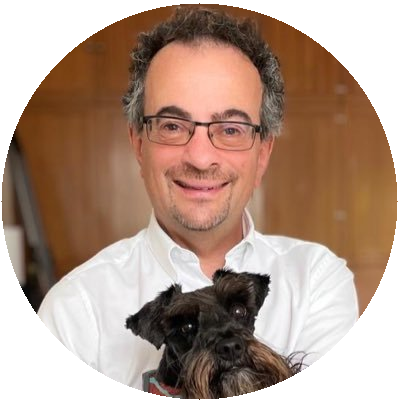
CEO of Free Speech Union International and former British ambassador to Chile, Ghana, and Mexico.
Benjamin has been helping FSU-BR become part of an international network of free-speech organisations.
Reflecting on his career defending free speech, he says:
“What surprised me most is how committed some people who grew up enjoying an open and free society can be to cancelling freedom of expression for others.”
“Too many people believe they possess a single version of the truth and hold it with such zeal and certainty that they convince themselves anyone who disagrees with them is not merely mistaken, but malicious — and therefore deserves to be silenced.”
“That is why it is essential to constantly reaffirm the fundamental importance of freedom of expression as a cornerstone of a free society.”
“This means defending the right to speak for everyone — especially those with whom we disagree.”
“I am delighted to see the concept of the Free Speech Union now reaching Brazil, the most important country in Latin America, from where a strong reaffirmation of free expression can resonate throughout the region.”
Leandro Narloch

Journalist and bestselling author.
Narloch is widely known among Brazilian readers for presenting fresh perspectives on subjects ranging from the country’s history to environmental debates. His work has also helped stimulate broader interest in science among Brazilian audiences.
Lygia Maria
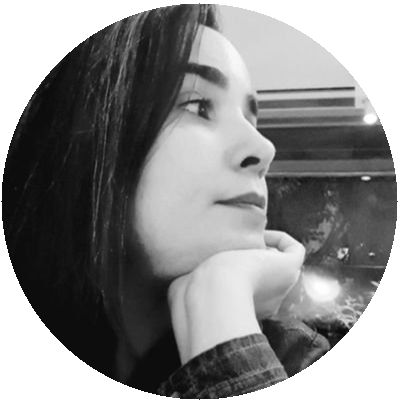
Journalist, columnist, and PhD in communication.
Through her weekly columns, Lygia Maria has increasingly emerged as a voice of moderation and a defender of fundamental freedoms such as freedom of expression. FSU-BR is fortunate to count on her advice.
Michael Shellenberger
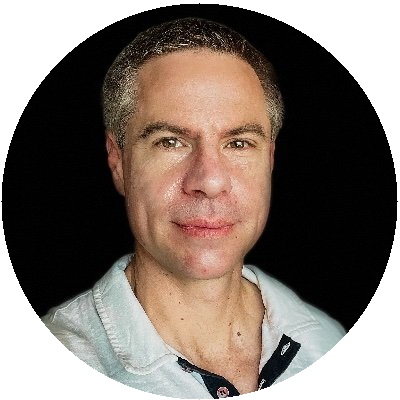
Journalist, activist, and bestselling author.
Shellenberger has developed a close connection with Brazil. When many Brazilians came to know him through the Twitter Files Brazil series in 2024, he was already speaking Portuguese. Through his organisation Civilization Works, he continues to contribute to debates about liberty in Brazil.
It was during one of the annual London meetings of international free-speech advocates that the idea of creating FSU-BR first emerged.
Penélope Nova
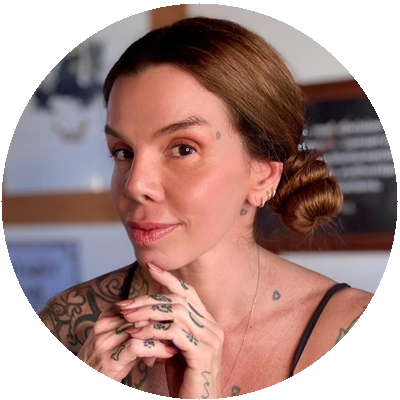
Communicator and producer.
Penélope Nova has used her public platform to educate audiences on subjects often considered taboo.
Reflecting on her experience in public debate, she told FSU-BR:
“Perhaps what surprised me most was realising that although I remained the same person — someone who defends individual liberties and respects diversity of ideas — over two decades I came to be seen as representing completely opposite ideological camps.”
“The irony is that I never changed sides.”
“I simply continued to follow the truth with intellectual honesty.”
Roberto Freire
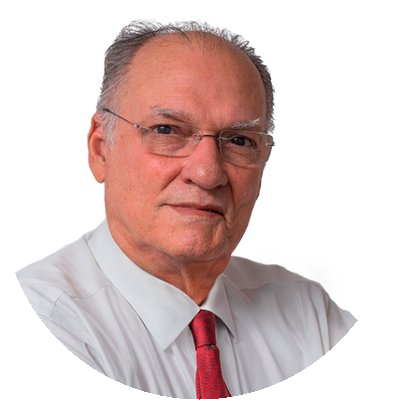
Lawyer, politician, and member of Brazil’s 1988 Constituent Assembly.
When we invited Freire to become an honorary member of FSU-BR, we mentioned that we wished Brazil were more like the United States in protecting freedom of expression.
Freire replied simply: the Brazilian Constitution itself leaves little to be desired in this regard.
What Brazil lacks is not constitutional guarantees — but the political will to honour them.
Precisamos unir as forças. Criei essa news letter para ajudar a trabalhar pela liberdade resgatando e para preservar e regatar a história do que lutaram pela liberdade ao longo dos tempos. Paralelamente criei o site Vigilantes da Liberdade, sem fins lucrativos, com o objetivo de estabelecer parcerias e construir pontes com quem comunga dos mesmo princípios e objetivos. Infelizmente tenho visto muita fala e pouca ação por parte da maioria.
http://vigilantesdaliberdade.org